Sort Journey - Travel Puzzle
- 4.7
- Rating
- 1.00M
- Installs
- Free
- Price

 Analysis by App-foxy
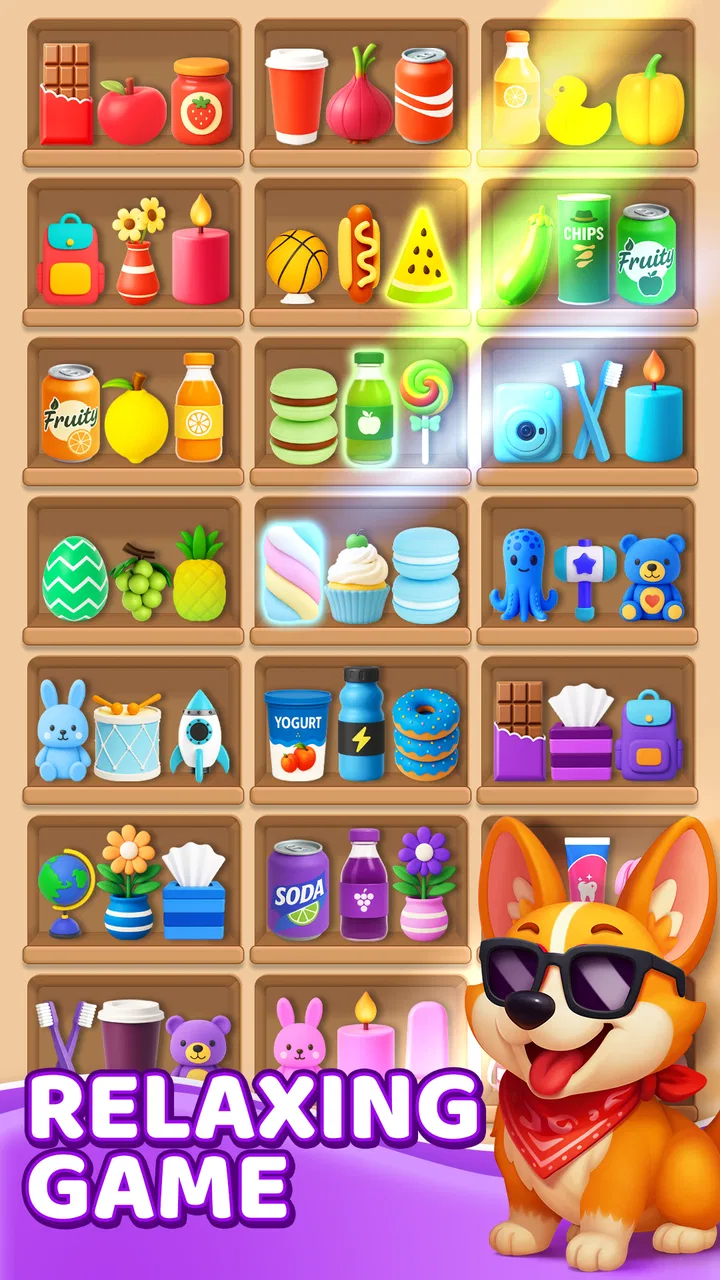
I approached Sort Journey - Travel Puzzle expecting a light sorting game, but what stood out was how deliberately it turns travel-themed objects into a calm, repeatable puzzle routine. The basic idea is easy to understand: arrange matching items, clear each board, and move through a long series of compact challenges. That simplicity makes it approachable, yet the changing layouts give the game enough resistance to keep me thinking rather than tapping automatically.
This is a free puzzle game from Bluetile, rated for Everyone, and it suits the kind of player who wants something gentle to pick up for a few minutes. Its travel setting gives the boards a more recognizable personality than a plain collection of colored shapes. I found myself treating each level as a small packing or organizing problem, which makes the theme feel connected to the action instead of being decorative wallpaper.
The game has attracted over a million installs and holds a 4.8 average from around 29 thousand ratings, so it is clearly reaching a broad audience. Those figures do not replace personal experience, but they do suggest that the relaxed sorting formula is landing with many players. My own recommendation is more selective: it is a strong choice for casual puzzle fans, but less convincing for anyone looking for deep strategy, a story-driven journey, or highly competitive play.
You May Also Like

 Blood Strike: 2.5 Anniversary
Blood Strike’s Loadouts Turn Every Drop Into a Tactical Gamble
A close look at Blood Strike’s custom loadouts: how fast access to signature weapons reshapes its battle royale rhythm, rewards preparation, and narrows the gap between fights.

 Pandora - Music & Podcasts
Pandora’s Music Is Easy to Start, but Harder to Recover
Pandora’s strength is its low-effort path from a seed to a station. Its weak spot is how much confidence it asks you to place in connection, setup, and quiet recovery.

 8 Ball Pool
 Is Built on Rivalries, Rematches, and Routine
A close look at the rivalries, rematches, shared routines, and unanswered safety questions that turn a quick pool match into a persistent mobile community.

 Samsung Music
’s Quiet Strength Is Playing What You Already Own
Its reach comes less from spectacle than from dependable access to a personal library. That simplicity is both the app’s strongest retention engine and its ceiling.

 AccuWeather: Weather Radar
AccuWeather Review: A Quick, Clear Forecast for Everyday Decisions
For everyday plans, the best forecast is the one you can understand quickly. AccuWeather makes rain timing, radar, and local conditions easy to act on, with a few trade-offs.

 Hill Climb Racing
Why Hill Climb Racing Still Turns Crashes Into One More Run
A tiny car, a bumpy hill and one more upgrade: Hill Climb Racing keeps resurfacing because its simple chaos makes every near-miss feel personal.
More From Our News Desk



How I decided whether it was worth keeping
When I judge a game like this, I look beyond whether the first few boards are pleasant. The important questions are whether the rules stay readable, whether difficulty grows without becoming irritating, whether the theme adds anything, and whether the game respects short sessions. I also consider how it compares with familiar alternatives such as match-three games, classic tile puzzles, and sorting games built around increasingly crowded containers.
On those points, Sort Journey performs best as a low-pressure mental break. It does not ask me to learn a complicated control scheme. The central task is visible almost immediately, so I can return after a day away without needing to remember a plot, a character ability, or a large collection of special rules. That makes it particularly suitable for waiting rooms, commutes, or the few minutes before bed when I want activity without a demanding commitment.
The travel theme also affects my decision. A sorting game can become visually interchangeable with dozens of others, but here the presentation is built around the idea of moving through places and organizing travel-related items. I would not call it a substitute for an actual travel game or an exploration adventure. Instead, the theme gives the familiar puzzle structure a gentle sense of progression and helps each session feel like part of a larger route.
What the opening experience gets right
The early levels are easy to approach because the goal is not buried under instructions. I could focus on recognizing groups, planning the order of moves, and avoiding an arrangement that blocks the remaining pieces. That gradual introduction is useful for children and for adults who do not normally play puzzle games. The Everyone age rating matches that accessible tone, although younger players may still need help understanding why a seemingly harmless move can make a board harder to finish.
I especially like the way sorting encourages a pause before every tap. In a fast match-three game, I often react to whatever combination appears first. Here, the better habit is to scan the whole board, identify which items are constrained, and decide what should move first. That small change makes the game feel more thoughtful without turning it into a heavy logic exercise.
A practical tip is to avoid clearing the most obvious group immediately. I found it more useful to check whether that move opens a useful space or exposes an item needed elsewhere. In crowded layouts, an empty position is not just a reward; it is working room. Thinking of empty space as a resource is one of the easiest ways to improve, and it is also the point at which the game becomes more interesting than simple visual matching.
Why the larger level count matters in practice
The game is presented as containing over a thousand relaxing puzzle levels. I treat that as a promise of longevity rather than a reason to rush. A large level collection is valuable here because the format is naturally suited to short sessions: I can complete a board, stop, and return later without losing the thread of a campaign. It also makes the game a better companion for routine moments than a puzzle with only a small introductory set.
At the same time, a long level path creates a trade-off. Variety has to come from board arrangement and the way items are distributed, because the central action remains sorting. Players who need a constant stream of new mechanics may eventually find the formula familiar. I did not see that as a flaw during brief sessions, but it is an important distinction: the appeal is steady relaxation and gradual problem solving, not dramatic reinvention at every stage.
For a realistic everyday example, I would use it during a ten-minute coffee break. I can start a level without preparing a long session, work through the layout while keeping half an eye on the clock, and stop after a natural board is complete. If I were using a story-heavy adventure in the same situation, I would either feel rushed or leave the game mid-objective. Sort Journey is better designed for interruption.
Small habits that make difficult boards less frustrating
My most useful approach is to separate observation from action. Before making a move, I look for items that have limited access and deal with those before the groups that are already easy to reach. This prevents the common mistake of filling a useful space with a convenient match and then discovering that the important piece is trapped behind it.
I also recommend treating a failed attempt as information rather than immediately repeating the same sequence. If a board collapses after a particular early move, that move probably consumed flexibility. Replaying with a different first priority is usually more productive than tapping faster. The game rewards calm planning, so speed is rarely the solution when a layout feels blocked.
Another useful trade-off is knowing when to stop. Because the atmosphere is relaxing, it is tempting to continue after concentration has faded. That can make a manageable board feel unfair. I get better results when I pause after a frustrating attempt and return later, especially because the game does not require me to maintain a complicated chain of decisions across a long story mission.
Where Sort Journey stands against other puzzle choices
Compared with match-three games, this is a quieter experience. Match-three alternatives are usually better when I want quick reactions, flashy cascades, or a stronger sense of immediate reward. Sort Journey is the better fit when I want to inspect a board and make deliberate choices. Someone who enjoys creating chain reactions may find the sorting pace too restrained, while someone who dislikes frantic visual effects may appreciate its calmer structure.
Compared with classic tile-matching games, the difference is the emphasis on space and order. A traditional tile puzzle often asks me to find identical pieces in a dense field or plan a sequence around fixed movement rules. Sort Journey feels more like organizing a collection under pressure from limited room. That gives it a satisfying planning angle, although players who prefer pure pattern recognition may find the spatial decisions less immediately rewarding.
It also sits near container-sorting games, where colors or objects must be grouped into separate spaces. The advantage here is the travel framing and the broad level path. The limitation is that the core satisfaction still comes from the same kind of sorting logic. If I already play several games built around arranging items into containers, this may feel comfortably familiar rather than genuinely new.
For people who want a serious brain-training routine, I would choose a dedicated logic puzzle app instead. Those alternatives are generally a better match for formal exercises, strict puzzle types, or measurable improvement in a particular reasoning skill. This game is more recreational. It asks me to plan, but it does so in a friendly setting rather than presenting itself as a demanding mental workout.
For children, families should consider the difference between an Everyone rating and effortless play. The age classification makes the content broadly accessible, but younger players may still encounter boards where patience and planning matter. I think it works well as a shared activity, with an adult explaining why preserving open space is useful. It is less suitable if the child expects constant action or becomes upset when an early move leads to a restart.
Who should choose it, and who should skip it
I would recommend it to casual players who enjoy organizing, matching, and solving compact layouts without pressure from timers or competition. It is also a sensible download for someone who wants a travel-flavored puzzle rather than another abstract grid. The free entry point makes it easy to try, and the current version, 1.7.0, gives users a clear version reference when checking compatibility on an older device.
The minimum operating system is Android 7.0, which keeps the game accessible to many older Android phones and tablets. That is useful for players who reserve a newer device for demanding games but still want a puzzle title on a secondary handset. I would still judge the experience on the actual device, especially if screen size or touch accuracy is a concern, because sorting depends on selecting the intended item cleanly.
I would skip it if my main goal were a rich narrative, online rivalry, elaborate character development, or a constantly changing set of game modes. Nothing about the central concept suggests that it is trying to compete with a large adventure game. I would also hesitate if I knew I disliked repetitive sorting mechanics, because the travel theme can soften repetition but cannot remove the fundamental structure.
What the free model means for a real player
The game is free to download, which lowers the risk of trying it during a spare moment. It includes in-app purchases ranging from $1.99 to $99.99 per item. That range is worth keeping in mind before handing the device to a child or allowing purchases without supervision. I do not view the presence of optional spending as an automatic reason to reject the game, but I would decide in advance whether I want to play entirely within the free experience.
My advice is to begin with a simple boundary: enjoy the normal level rhythm first and only consider spending if a purchase clearly improves a problem you personally have. Do not buy merely because a difficult board interrupts your flow. The core appeal is learning to protect space and plan moves, so paying to remove every moment of friction could also remove part of the puzzle satisfaction.
This is another area where alternatives may fit better. A player who wants a completely fixed-cost premium puzzle may prefer a paid title with no purchase prompts. A player who likes free games and is comfortable ignoring optional offers will probably find Sort Journey easier to approach. The right choice depends less on the existence of purchases than on how strongly the player wants a controlled, interruption-free experience.
How much commitment is needed to enjoy it?
Very little commitment is needed to understand the game, but the long level path rewards consistency. I do not need to play every day, and I can return after a break without studying a complicated ruleset. That makes it forgiving for irregular players. On the other hand, anyone who expects a dramatic payoff for reaching distant milestones may find the steady format less exciting than a puzzle adventure with a narrative arc.
I found the best rhythm was to play until I completed a few boards, then stop before the sorting began to feel automatic. That approach keeps the game feeling like a small mental exercise instead of turning it into background tapping. It also makes the travel framing more enjoyable, because each session feels like a short stop along the route rather than an obligation to clear a large block of levels.
My recommendation after playing it
Sort Journey - Travel Puzzle succeeds because it understands the value of a simple puzzle that does not demand a large emotional or time investment. Bluetile has paired familiar sorting logic with a travel identity, a broad collection of levels, and an accessible presentation. The result is not the most complex puzzle game I have played, but it is one I can imagine keeping installed for those ordinary moments when I want to focus on something small and satisfying.
The strongest reason to try it is the balance between approachability and planning. New players can understand the objective quickly, while experienced players can improve by protecting open space, prioritizing restricted items, and reconsidering early moves. Those details give the boards more depth than a simple matching exercise, even though the overall mood remains relaxed.
The main reason not to choose it is equally clear: the core mechanic stays central. If I wanted constant novelty, competitive pressure, or a story that carries me from one scene to another, I would choose a different category of game. If I already have several sorting titles and need a radically new system, the travel presentation may not be enough to justify another installation.
For me, the decision comes down to the kind of break I want. When I need a quiet, interruption-friendly puzzle with a recognizable theme, I would recommend giving it a try. The free download makes that decision easy, while the Everyone rating broadens its audience. I would simply keep the purchase range in mind, set sensible spending controls, and approach the game as a relaxing collection of planning problems rather than a full travel adventure.
In short, this is a good recommendation for patient casual players, families looking for a gentle shared puzzle, and anyone who enjoys arranging objects until a messy board becomes orderly. It is a weaker match for players who need speed, spectacle, or deep strategic systems. The best way to enjoy it is to slow down, preserve your empty spaces, and let each board be a short journey rather than a race.
FAQs for Sort Journey - Travel Puzzle
01What is Sort Journey - Travel Puzzle?
Sort Journey - Travel Puzzle is a unique puzzle game that combines the thrill of traveling with the challenge of sorting puzzles. Players embark on a virtual journey around the world, solving different levels by arranging items in a specific order. It's designed for both casual gamers and puzzle enthusiasts, offering a relaxing yet engaging experience.
02Is Sort Journey - Travel Puzzle available for both Android and iOS?
Yes, Sort Journey - Travel Puzzle is available for download on both Android and iOS platforms. You can find it on the Google Play Store and the Apple App Store, ensuring that users with different devices can enjoy the game without any compatibility issues. Make sure your device meets the minimum requirements for optimal performance.
03Are there in-app purchases in Sort Journey - Travel Puzzle?
Yes, Sort Journey - Travel Puzzle offers in-app purchases. While the game is free to download and play, users can buy additional features or items to enhance their gaming experience. These purchases can include hints, level skip options, or cosmetic items. It's important to manage your settings if you want to restrict purchases.
04What are the main features of Sort Journey - Travel Puzzle?
Sort Journey - Travel Puzzle features a variety of levels with increasing difficulty, each set in different travel destinations. The game includes vibrant graphics, a soothing soundtrack, and intuitive controls that make it easy for anyone to pick up and play. Additionally, it offers daily challenges and rewards to keep players engaged.
05Can I play Sort Journey - Travel Puzzle offline?
Sort Journey - Travel Puzzle can be played offline, allowing players to enjoy the game without needing an active internet connection. This makes it an excellent choice for long trips or areas with limited connectivity. However, some features like daily challenges and updates may require an internet connection.
Pros
- Engaging puzzles with increasing difficulty.
- Beautifully designed travel-themed graphics.
- Intuitive controls for easy navigation.
- Offline mode available for on-the-go play.
- Frequent updates with new levels.
Cons
- Limited hints can be frustrating.
- In-app purchases can be pricey.
- Ads can interrupt gameplay.
- No multiplayer option available.
- Requires frequent app updates.

Sort Journey - Travel Puzzle
Gallery